What Is The Difference Between Ethiopian Coffee And Brazilian Coffee?
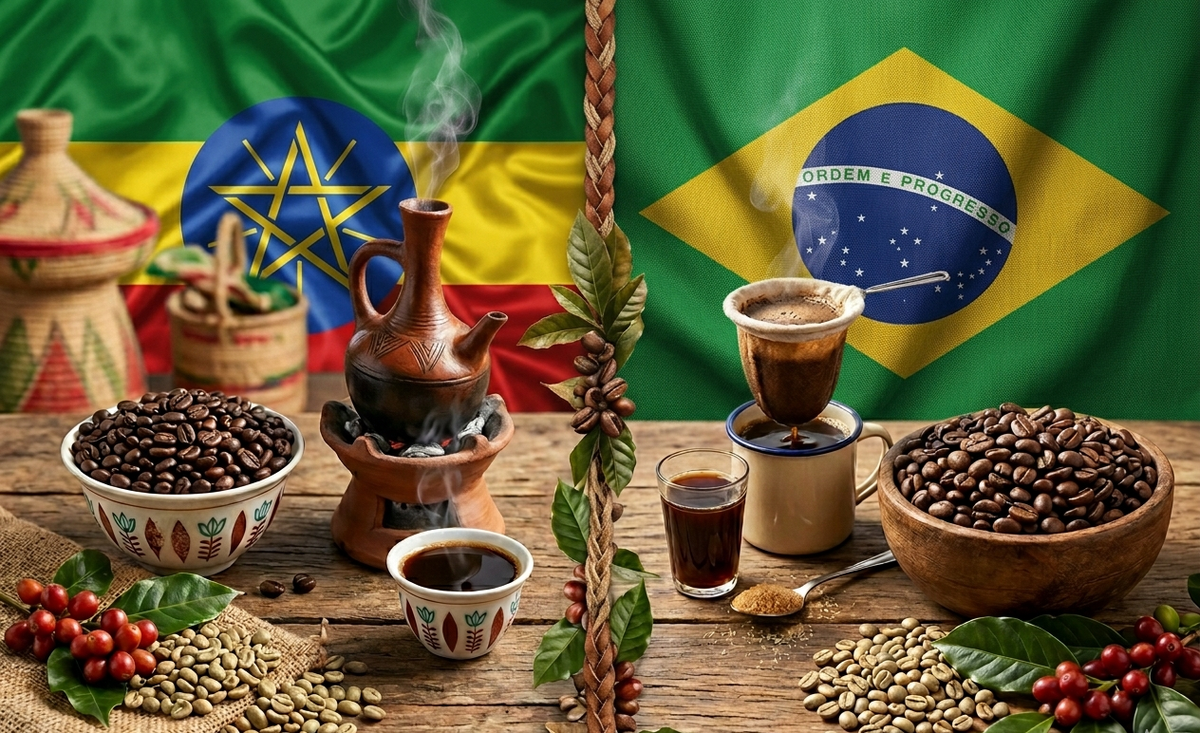
Ethiopian coffee and Brazilian coffee represent two completely different schools in the world of specialty coffee, and each one carries a distinctive character that reflects its environment, cultivation method, and processing. While Ethiopia is known as the original home of coffee and offers complex floral and fruity flavors, Brazil is famous for producing a more balanced and smooth coffee with a clear chocolatey character, making the comparison between them an enjoyable experience for every coffee lover.
In this article, we'll take you on a quick tour to understand the key differences between these two types, why each is considered a standout choice among the best specialty coffee varieties, and how you can choose the right one based on your personal taste.
Why Does Ethiopian Coffee Taste Different From Brazilian Coffee?
The difference in taste between Ethiopian coffee and Brazilian coffee comes down primarily to differences in origin, cultivation method, and processing. This is because:
- Ethiopian coffee is generally more complex in flavor and tends toward fruity and floral characteristics.
- Brazilian coffee, on the other hand, is calmer and more balanced, with notes of chocolate and nuts.
This diversity makes each type suitable for a different palate in the world of specialty coffee.
- Most varieties of Ethiopian coffee are processed in ways that highlight natural flavors and fruit notes.
- Brazil, meanwhile, relies on methods that produce a smoother and more consistent cup.
How Do Climate And Soil Affect Coffee Flavor?
Climate and soil are among the most important factors that define a coffee's character.
Coffee grown in high-altitude, cool regions develops slowly, which helps build more complex and well-defined flavors, while warmer, lower-altitude regions produce a fuller and smoother character.
Soil also directly affects the plant's absorption of minerals, which in turn reflects in the final flavor of the cup.
That's why there is a clear difference between coffee from one country to another, even if it comes from the same variety.
Why Do You Taste Fruit In Ethiopian Coffee And Chocolate In Brazilian Coffee?
The sense of fruity flavors in Ethiopian coffee comes from the nature of its varieties and processing methods, especially natural processing, which preserves the fruit sugars inside the bean, giving a clear fruity character such as berries and citrus.
Brazilian coffee, on the other hand, tends toward chocolatey flavors due to the more stable climate and processing methods that produce a smoother, less acidic taste, which highlights the creamy and rich character.
Which Is Better For Espresso: Ethiopian Or Brazilian?
The better choice between the two depends on what each taster is looking for in their cup. In general, Brazilian coffee is often considered the ideal choice for espresso due to its balance, smoothness, and chocolatey character with a heavy body and a clear crema, making it suitable for daily use in coffee shops.
Ethiopian coffee, on the other hand, tends to have a more complex character, with fruity and floral flavors and more prominent acidity, which gives the espresso a different and more vibrant personality, though it may be less traditional for those who prefer the classic espresso taste.
South Coffee offers a selection of Brazilian and Ethiopian coffee suited for to fit different brewing styles and the tastes of specialty coffee lovers.
How Does The Coffee Processing Method Affect Taste?
The processing method is one of the most important factors that determines the final flavor profile of the cup, even before roasting.
There are several main methods, and each one produces a different character:
- Natural Processing: The beans are dried with the fruit, which gives clear fruity flavors, higher sweetness, and a heavier body.
- Washed Processing: The fruit layers are removed before drying, producing a cleaner and more transparent coffee with balanced acidity.
Each processing method changes the balance of sweetness, acidity, and body, so the same variety can taste very different depending on how it was processed.
What Is The Difference Between Yirgacheffe, Sidama, And Jimma Coffee In Ethiopia?
Even though all three are types of Ethiopian coffee, each region has a clearly different flavor personality:
- Yirgacheffe: Known for strong floral and aromatic flavors such as jasmine and citrus, with a bright acidity and a relatively light body.
- Sidama: Offers a greater balance between acidity and sweetness, with fruity notes like berries and citrus, but less intense than Yirgacheffe and more consistent.
- Jimma: Tends toward a more earthy and heavy character, with less complex flavors compared to other regions, and is often used in blends or everyday coffee.
This diversity within Ethiopia itself makes it one of the richest coffee-producing countries in the world in terms of character and flavor.
offers a curated selection of Ethiopian coffee from different regions such as Yirgacheffe and Sidama, making it the go-to roastery for experiencing the best coffee beans for specialty coffee with a wide variety of flavors.
Did You Know That Different Regions Of Brazil Produce Completely Different Flavors?
Although Brazil is generally known for its balanced character, the differences in geographic regions within the country lead to a clear variety in flavor.
Some regions produce coffee with a distinct chocolatey character and nutty notes, while other regions lean toward higher sweetness or a light acidity.
This diversity is due to differences in altitude, soil, and processing methods between farms, which means Brazilian coffee is not a single profile but rather a wide range of experiences.
South Coffee offers a curated selection of the best Brazilian coffee from different regions to experience a variety of balanced and nuanced flavors within specialty coffee.
Among the best specialty Brazilian coffee options available: , , and .
What Is The Best Specialty Coffee For Those Who Don't Like High Acidity?
If you're not a fan of high acidity, Brazilian-style coffee or coffee roasted to medium or dark levels is generally the most suitable choice for you.
These types are characterized by chocolatey, caramel, and nutty flavors with a fuller body and lower acidity.
Choosing processing methods such as natural drying also helps reduce the perception of acidity and brings out sweetness in the cup.
How Do You Know The Ethiopian Coffee You're Buying Is Authentic?
You can distinguish authentic Ethiopian coffee from other types through several important factors, including:
- Clear information about the region, such as Yirgacheffe, Sidama, or Jimma.
- Mention of the processing method and altitude.
- Realistic such as fruity or floral flavors.
- A recent roast date, not an old production batch.
- A complex and well-defined flavor.
South Coffee offers authentic specialty Ethiopian coffee with clear details about origin and processing to ensure a reliable, high-quality experience.
Among the best options available at South Coffee: , , and Coffee.
What Is The Difference Between Specialty Coffee And Commercial Coffee And Is The Price Justified?
Specialty coffee is evaluated according to strict quality standards that include taste, cleanliness, and the absence of defects, and it generally comes from carefully selected crops roasted in a way that reveals their natural characteristics.
Commercial coffee, on the other hand, focuses more on mass production and consistency rather than fine details in flavor.
Specialty coffee also stands out for its greater variety of flavors and a clear character according to its origin, while commercial coffee is more standardized and consistent but less complex.
As for the price, it reflects the quality of the beans, farming methods, precise , and shorter supply chains, so it is generally justified for those looking for a higher-level coffee experience.
South Coffee offers carefully selected from premium crops with high quality and clear details to help you experience the difference of specialty coffee for yourself.
Why Does Ethiopian Coffee Always Appear In World Tasting Championships?
Ethiopian coffee is considered one of the most frequently featured types in tasting championships because it possesses enormous genetic diversity that naturally makes its flavors complex and distinctive.
Thanks to its status as the homeland of coffee, it contains hundreds of local varieties that produce clear floral and fruity flavors that are difficult to replicate in any other origin.
Traditional processing methods, especially natural processing, also bring out layers of flavor in a rich way that makes it ideal for evaluation in specialty coffee competitions.
This coffee consistently scores high in tasting assessments because of its balance between acidity, aroma, and cup cleanliness, which is what makes it a preferred choice among judges and specialists.
South Coffee offers a curated selection of the best specialty Ethiopian coffee varieties that reflect this diversity of flavors and are perfect for those who enjoy a unique tasting experience.
Where Can You Find The Best Specialty Ethiopian And Brazilian Coffee In The UAE?
If you're looking for the best specialty Ethiopian coffee and Brazilian coffee experience in the UAE, what matters is not just the type of coffee, but its source, the quality of its selection, and the roast that brings out its true flavor.
Good coffee requires roasters that pay attention to details such as origin, processing method, and roast date to ensure a consistent, high-quality taste.
South Coffee is considered one of the trusted choices for specialty coffee lovers, offering a wide range of carefully selected Ethiopian and Brazilian coffee, with a focus on freshness and flavor diversity.
It also provides options suitable for both individuals and cafés, with fresh coffee packages and at consistent quality and competitive prices, making it a preferred destination for specialty coffee enthusiasts.
How Do You Choose The Right Grind Size When Buying Specialty Coffee?
Choosing the right size depends primarily on the brewing method you use, because each method requires a different grind size to achieve the best flavor extraction. This is because:
- Coarse grind is suited for cold brew as it slows down extraction and produces a smooth taste, while a medium grind suits filter brewing and balances extraction with clarity of flavor.
- Fine grind is best for espresso, as it speeds up the extraction process and highlights concentrated and intense flavors in a short time.
Choosing the correct grind size helps you avoid bitter or weak-tasting coffee and ensures a balanced cup every time.
South Coffee is considered the best specialty coffee roastery to help you choose the right crop and grind size for each brewing method, enabling you to reach the best result based on your taste and preparation style.
How Do You Build Your Own Taste Between Ethiopian Coffee And Brazilian Coffee?
Building your coffee palate starts with experimenting and comparing between different flavor profiles. Especially since:
- Ethiopian coffee usually offers a fruity and floral character with more pronounced acidity.
- Brazilian coffee tends toward chocolatey and nutty flavors with a more balanced and smooth body.
The best way to identify your taste is to try each type more than once and with different brewing methods, such as and espresso, because the brewing method can significantly change the experience of the coffee.
South Coffee is the best online specialty coffee store, offering a curated selection of Ethiopian and Brazilian coffee that helps you discover your personal taste with ease and expertise.
Try the best specialty coffee varieties now and shop from South Coffee for carefully selected crops and consistent quality in every cup.
FAQs
What are the main differences between Ethiopian coffee and Brazilian coffee?
Ethiopian coffee tends toward fruity and floral flavors with more prominent acidity, while Brazilian coffee is more balanced and leans toward chocolate and nuts.
Which is better: Brazilian or Ethiopian coffee?
There is no absolute winner. Ethiopian coffee suits those who enjoy complex flavors, while Brazilian coffee suits those who prefer a balanced and calm taste.
Is Brazilian coffee or Ethiopian coffee more acidic?
Ethiopian coffee is generally more acidic and vibrant in flavor, while Brazilian coffee is less acidic and smoother.
Is Ethiopian coffee high quality?
Yes, it is considered one of the highest quality coffee types globally due to its variety diversity and clearly defined flavors.
What is the best way to choose between Ethiopian coffee and Brazilian coffee?
It depends on your taste. Try both to determine whether you prefer a fruity or a balanced chocolatey character.
Does the roasting method affect the taste of Ethiopian and Brazilian coffee?
Significantly. Light roasting highlights the acidity of Ethiopian coffee, while medium and dark roasting brings out the chocolatey character of Brazilian coffee.