Why Does Coffee Taste Different When You Make It at Home Compared to a Café?
Have you ever noticed that when making coffee at home, the same cup doesn't carry the taste you enjoy at the café? Sometimes the beans are the same, and the method seems similar, yet you find a clear difference in the coffee's taste, aroma, and texture. The reason isn't tied to a single factor, but to a set of details starting from the quality of the beans and their roast level, extending to the grind, the ratio of water to coffee, the temperature, and the extraction method. This is where the importance of choosing coffee beans carefully comes in.
In this article, we'll explore the main reasons behind the difference in coffee taste between home and the café, and the role of bean quality, grinding, water, and extraction methods in getting a better cup of coffee.
Why Don't You Always Get the Same Café Taste When Making Coffee at Home?
Because cafés rely on a set of precisely controlled factors, starting with the quality of the beans and their roast level, moving through the grind level and the amount of coffee and water, and reaching the water temperature and extraction time.
The barista's experience in fine-tuning preparation or preparation also helps repeat the same result in every cup.
As for making coffee at home, any slight difference in one of these factors can noticeably change the coffee's taste.
How Does Water Quality Affect Coffee Taste?
Water makes up the largest part of a cup of coffee, so its properties directly affect the flavor, since:
- Very hard water, or water containing a high percentage of minerals, may make the coffee taste more bitter or overpower its flavors.
- Meanwhile, very soft water may lead to weak extraction and a bland taste.
So, using clean water with balanced minerals when making coffee at home helps bring out the natural flavors of the beans and achieve the perfect coffee taste.
Does the Type of Coffee Grinder Make a Difference?
Yes, the type of grinder is one of the important factors in extraction quality. A good grinder produces particles that are close in size, which allows for more balanced extraction.
Uneven grinding, on the other hand, can cause some particles to be over-extracted and others under-extracted, making the coffee taste bitter or sour and unbalanced.
Therefore, investing in the right for making coffee at home can have a clear effect on the quality of the cup.
How Does the Grind Level Affect the Final Result?
The level determines how quickly water passes through the coffee particles, and therefore directly affects extraction and the , where:
- Fine grind: suits espresso preparation, and increases the contact area between the beans and water, so extraction is faster and more concentrated.
- Medium grind: usually suits filter coffee preparation, and gives a good balance between extraction speed and flavor.
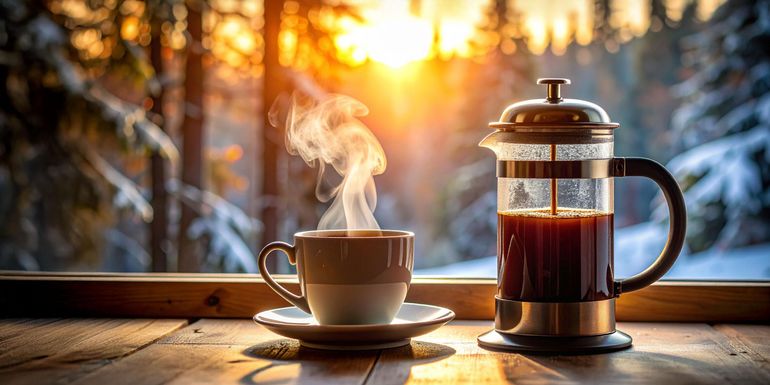
- Coarse grind: suits preparation methods that need longer contact time with water, such as the French press.
Also, if the grind when making coffee at home is too fine or coarser than needed for the preparation method, you may end up with coffee that's bitter, sour, or lacking balance.
Does the Coffee-to-Water Ratio Differ Between Home and Café?
It might differ, but not necessarily because the café uses a fixed ratio that's different from home. What matters most is keeping the ratio suited to the preparation method and type of bean consistent.
- In drip coffee, the ratio of beans to water affects the strength of the drink and the clarity of the flavors.
- In espresso, the amount of water compared to the bean dose is more precise, and the output is adjusted according to the recipe used.
- Changing the amount of water while keeping the amount of beans fixed can make the coffee lighter or more concentrated.
So, cafés rely on specific recipes and weigh the beans and water instead of relying on estimation, which helps achieve a more consistent result.
How Does Adjusting the Temperature Affect Coffee Extraction?
Water temperature controls the water's ability to extract compounds and flavors from the beans.
- If the temperature is too low, extraction may not happen sufficiently, making the coffee seem weak or sour.
- Meanwhile, very high temperatures may lead to over-extraction, making bitterness more apparent.
So, maintaining a stable temperature while making coffee at home is important for achieving balanced , especially when dealing with beans that contain delicate flavors.
Why Do Some Coffee Machines Seem More Consistent Than Others?
The difference comes down to the machine's ability to control the factors affecting preparation and repeat them the same way every time. Among the most important of these are:
- Stability of water temperature during extraction.
- Stability of water pressure, especially when preparing espresso.
- Even distribution of water over the beans.
- Precision in controlling extraction time.
- Quality of the machine's components and the design of its heating and pumping system.
This is why a good machine may give a result that's close from one cup to the next, while some coffee-making devices at home need more intervention from the user to adjust the variables.
What Everyday Mistakes Change the Taste of Coffee?
Even when using the finest types of beans, there are small details that repeat daily and may change the result without us noticing, such as:
- Leaving the beans ground for a long time: they lose part of their flavor and aroma as they're exposed to air.
- Not measuring the amount of beans and water: relying on estimation with the may make the cup stronger or lighter than usual.
- Using an unsuitable grind level: incorrect grinding leads to unbalanced extraction.
- Neglecting to clean the preparation tools: residue from old oils and coffee may affect the taste of the new cup.
- Using unsuitable coffee water: the quality of the water and its mineral composition clearly affect the result.
- Inconsistent temperature: big changes while making coffee at home may lead to a difference in the level of extraction.
Is the Type of Beans Always the Reason for the Difference in Taste Compared to the Café?
Not always, since the type and quality of the beans are essential factors, but they're part of a bigger system.
You might use excellent beans, and still get a different result because of the grind, the water ratio, or the preparation method.
To get a taste closer to what cafés offer, pay attention to:
- The type of beans and their roast level.
- The grind level suited to the preparation method.
- The coffee-to-water ratio.
- The water temperature and extraction time.
- The quality of the preparation equipment and grinder.
How Can You Get Closer to Café Taste Using Home Tools?
You don't necessarily need expensive professional equipment, but it's important to choose the right tools and use them consistently.
You can start with these steps while making coffee at home:
- Use fresh, high-quality beans, and preferably grind them right before preparation.
- Get a good grinder that provides an even grind level, because grinding directly affects extraction.
- Use a digital scale to measure the amount of beans and water instead of relying on estimation.
- Adjust the grind level according to the preparation method, whether you're using espresso or filter.
- Maintain a suitable and stable water temperature throughout the preparation process.
- Clean your coffee tools regularly so that old oils and residue don't mix with the new flavors.
- Record the recipe that gives you the best result in terms of the amount of beans and water, grind level, and preparation time, then repeat it.
When Is the Difference Due to the Preparation Method and Not the Coffee?
Not every difference in taste means the beans used are of lower quality. Sometimes the coffee is good, but the preparation method doesn't suit its characteristics. This can be noticed through:
- Grinding: if it's finer or coarser than required, the extraction rate changes and the flavor balance is thrown off.
- Coffee-to-water ratio: increasing or decreasing the water clearly changes the concentration of the drink.
- Temperature: water that's too cold may lead to weak extraction, while very high temperatures may increase bitterness.
- Extraction time: increasing or decreasing the time beyond what's suitable directly affects the result.
- Water distribution method: especially in filter coffee preparation, since even distribution helps extract the beans better.
So, before changing the type of beans, it's better to review the method of making coffee at home and adjust these factors.
Simple Steps to Improve Your Coffee at Home
Here are some practical and effective steps to improve the taste of your coffee while making coffee at home:
- Buy fresh beans from a trusted source.
- Grind the beans right before preparation.
- Use a grinder that provides an even grind.
- Weigh the coffee and water for consistent results.
- Adjust the grind according to the preparation method.
- Use good, clean water.
- Clean your coffee machine and tools continuously.
- Store the beans in an airtight container, away from heat, light, and moisture.
In the end, achieving a distinctive coffee taste at home doesn't depend on the type of beans alone, but on small details that start with choosing the beans and end with the preparation method.
And if you're looking for beans that give you a different experience in every cup, discover the best specialty coffee types from and choose what suits your taste, and enjoy coffee rich in flavor at home from our .
FAQs
Why does my coffee taste different at home?
The taste may differ when making coffee at home due to the quality of the beans, the grind level, the coffee-to-water ratio, the water temperature, the extraction time, in addition to the cleanliness of the preparation tools.
Why does café coffee taste better than it does at home?
Because cafés rely on high-quality beans and precise equipment, with continuous adjustment of the grind, temperature, and preparation ratios, along with the barista's experience in achieving balanced extraction.
Why does my coffee taste sour even though I'm pouring it correctly?
The reason is often weak extraction, which can result from too coarse a grind, low water temperature, or too short a preparation time. Try a slightly finer grind or increasing the extraction time.
What is the correct way to make coffee at home?
Use fresh beans, grind them before preparation, then adjust the coffee-to-water ratio, the temperature, and the grind level to suit the preparation method.