Why Do Passion Fruit, Pineapple, And Peach Flavors Appear In Colombian Coffee?
Colombian passion fruit coffee stands out by giving the taster a different and unique experience, as it combines the qualities of Colombian beans with the taste of refreshing tropical fruit. Passion fruit flavor gives a sense of vibrancy and distinctive aroma, in addition to good acidity, while pineapple flavor has a distinctive tropical taste. This type of coffee is more suitable for lovers of coffee with an aromatic and fruity character that brings together acidity and sweetness in a harmonious way that catches attention and offers a unique experience.
In this article, we'll explain why some types of Colombian coffee are known for fruity flavors, how to taste passion fruit coffee and tell its hints apart, and what sets it apart.
Why Are Some Types of Colombian Coffee Known for Fruity Flavors?
The nature of weather conditions and soil factors in Colombia play an important role in the appearance of fruity flavors, given the good soil, high altitudes, and suitable temperature.
This nature also contributes to slowing the ripening of the coffee cherries, giving the beans a longer chance to form aromatic compounds and develop fruity flavors.
The processing and drying method also plays a major role in bringing out the flavors, which is why flavors resembling berries, citrus, or tropical fruits may appear.
Some coffee-growing regions such as Huila produce beans that combine natural sweetness with distinctive acidity, in addition to the appearance of fruity aromas.
How Does Passion Fruit Flavor Appear in Coffee?
Passion fruit coffee is considered the first choice for many coffee lovers due to its different and distinctive taste compared to other flavored coffees.
Passion fruit flavor can be sensed while drinking the coffee, and this does not necessarily mean there are actual pieces of passion fruit in the coffee. This sensation results from the interaction of several factors, including:
- Coffee processing method.
- Ripeness level.
- Type of bean.
- Coffee roasting method.
- Altitude of the farm above sea level.
While drinking the coffee, the taster senses a fruity taste, which is a mix of sweetness and acidity, especially when the coffee's roast level is medium to light.
What Is Meant by Fruit-Fermented Coffee?
The process of fermenting coffee with fruit means using fruit or some of its components in processing the coffee, in order to bring out fruit flavor in the coffee and in its sensory qualities.
This process is done in many ways depending on the nature of the farm, its location, and the type of product, and one method is adding the fruit during the fermentation period from the start.
Another method is adding certain fruit components under specific standards during fermentation, as with passion fruit coffee made through fermentation, and coffee produced through fermentation differs from coffee that naturally shows fruity hints.
Generally speaking, coffee that shows fruity hints is produced naturally due to the surrounding environment, while fermentation is done in a directed way, which is why it's necessary to know the type of processing in order to know the source of the flavor.
How Does Fruit Fermentation Affect the Final Flavor?
The fruit fermentation process affects the final flavor because of the processing environment the coffee goes through during the processing period, which directly affects the coffee's flavor as a result.
A number of aromas begin to appear, which brings out the coffee's sweetness because of the sense of certain fruit tastes, and the appearance of the fruit taste also varies depending on the fermentation duration and conditions.
Is Passion Fruit Flavor Added to the Coffee Beans?
Producing passion fruit coffee does not necessarily mean adding the flavor to the coffee beans, since getting the coffee by adding the flavor is only one of the methods.
Passion fruit coffee can also be produced naturally because of the qualities of the beans and the mechanism of their processing and roasting from the start, and the surrounding environment also has a major effect on the coffee's taste.
Factors such as soil type, farm altitude above ground level, the processing and roasting method, and the type of bean are considered among the most prominent factors affecting the coffee's flavor.
How Do Passion Fruit, Pineapple, and Peach Flavors Come Together in the Cup?
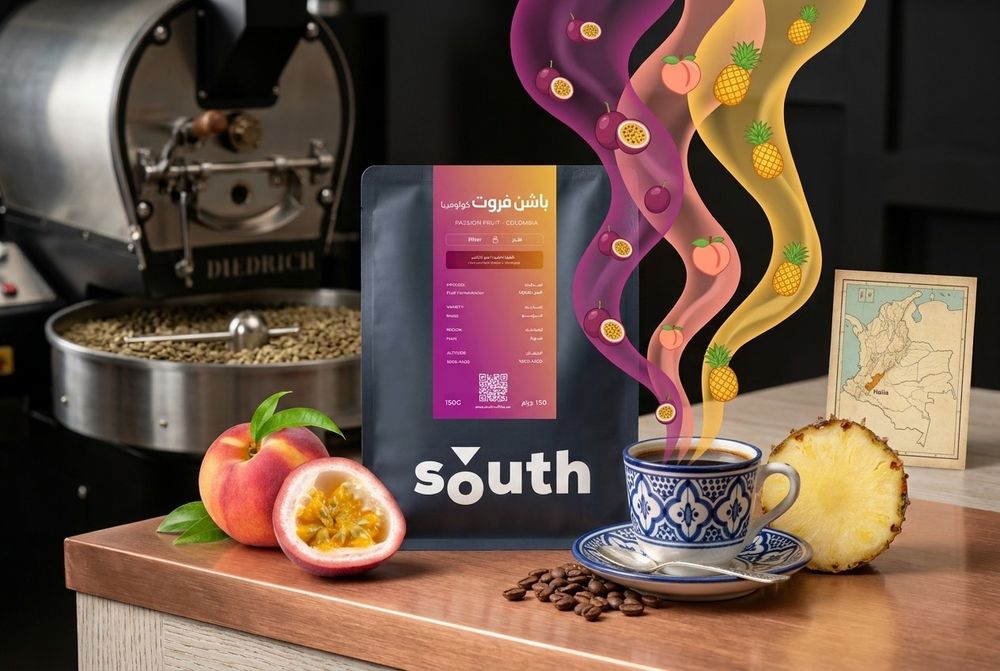
Passion fruit coffee can come together with peach and pineapple in a single cup, even though each has completely different qualities and taste from the other, which gives a unique tasting experience.
Passion fruit gives the coffee a distinctive acidity and a good aromatic scent because of its tropical nature, while pineapple has a refreshing taste and causes a feeling of vibrancy and energy.
Peach also gives the experience a sweeter, softer side, so harmony is achieved because of the nature of the three different flavors, and these flavors appear according to the nature of the environment in which the coffee beans are grown.
While tasting, a person first senses a distinctive aromatic flavor because of the passion fruit, then acidity begins to appear due to the presence of pineapple, before sweetness appears because of the peach.
What Distinguishes Colombian Huila Coffee?
The coffee found in the Huila region stands out for the complexity of its qualities because of:
- Its good climate.
- Its mountainous nature.
- Its altitude above ground level.
Specialty coffee flavors in Huila are also varied, which is why it has passion fruit coffee, pineapple coffee, and other well-known coffee flavors that have distinctive sweetness and good acidity.
The Huila region features many types of coffee that give tropical, fruity, or even citrus hints, in addition to sugary and floral notes, depending on the type of farm and the processing method.
How Does the Farm's Altitude Affect This Type of Coffee?
The farm's altitude directly affects the coffee's qualities because of the difference in temperatures, and the higher the beans are grown with moderate heat, the better the fruit.
Higher altitude also gives the beans the chance to ripen more slowly, and as a result, form more aromatic compounds and higher acidity.
The Huila regions are known for their high altitudes. Coffee quality is not determined by altitude alone, however, there are also many important factors such as:
- The growing and drying method.
- The processing mechanism.
- The type of beans.
- The roasting method.
Who Is Coffee With Clear Fruity Flavors Suitable For?
Coffee with clear fruity flavors suits people who don't absolutely prefer traditional coffee and want to try different flavors.
Fans of acidity and aromatic scents also prefer coffee with fruity flavors, such as passion fruit coffee and peach coffee and other distinctive flavors.
These types of coffee are known for a medium or light roast, in order to bring out the flavor and reveal the subtle differences between the beans and processing methods, according to the user's taste.
What Is the Best Way to Bring Out the Taste of Fruit-Flavored Coffee While Brewing?
The brewing method directly affects how strongly the fruit coffee's flavor is brought out, which is why it's necessary to choose the optimal brewing method to enjoy the coffee's flavor.
The manual filtering method is considered one of the distinctive methods, provided fresh beans are used with a suitable grind method, and the ratio between water and coffee must also be adjusted.
Attention must also be paid to extraction, since fast extraction will make the coffee weak, and likewise, extraction that is too slow will bring out an unwanted bitter taste, so the extraction time must be chosen carefully.
How Do You Taste Passion Fruit Coffee and Tell Its Hints Apart?
Enjoying the coffee experience has certain rituals for some people, and to taste the coffee and tell its hints apart, a few steps must be taken, as follows:
- Smell the coffee's aroma before tasting it.
- Take a small sip and hold it on the tongue to sense the acidity and the coffee's texture.
- Start sensing the flavor's hint and whether it has an aromatic or tropical character, while determining the level of acidity.
- Taste the coffee while it's hot, and continue drinking it after it cools slightly.
What Distinguishes Colombia Passion Fruit Coffee From South Coffee?
South Coffee's Colombia passion fruit coffee stands out for its distinctive origin from the Colombian Huila region, where the coffee beans grow at an altitude of 1,600 meters above sea level, in an environment that combines warm sunlight with rich soil.
These conditions, along with the unique processing using fruit fermentation, also give it a sensory character rich in hints of passion fruit and peach.
It is a premium Colombian coffee that offers a different experience for lovers of fruity coffee, as it combines an aromatic scent with refreshing fruity flavors that appear in the cup.
The processing method also makes it a suitable choice for anyone who wants to discover a Colombian specialty coffee with a distinctive tropical character, along with an experience of developed flavors that reflect the product's care in the stages of preparing the beans.
Discover the magic of South Coffee's Colombia passion fruit coffee, and enjoy a fruity blend of passion fruit and peach in every cup.
Order it now and go through a Colombian specialty coffee experience that takes you to the heart of the Huila mountains.
FAQs
Is passion fruit flavor added to the coffee?
Not necessarily; it may be a natural flavor resulting from the variety, processing, fermentation, and altitude, while some products contain added fruit flavoring.
Is passion fruit coffee acidic?
It's usually known for a bright, balanced acidity resembling tropical fruits, but the level of acidity varies depending on the beans and the processing and brewing method.
What flavors can appear alongside passion fruit coffee?
Hints of pineapple and peach may appear alongside passion fruit, in addition to citrus, berries, and florals, depending on the qualities of the beans and the processing and roasting method.
What is the best way to brew passion fruit coffee?
Manual filtering methods such as V60 clearly bring out the fruity and aromatic details, with careful adjustment of the grind, water temperature, and extraction time.